Work in the Medium That Annoys You: That's Probably Where Your Art Needs to Go
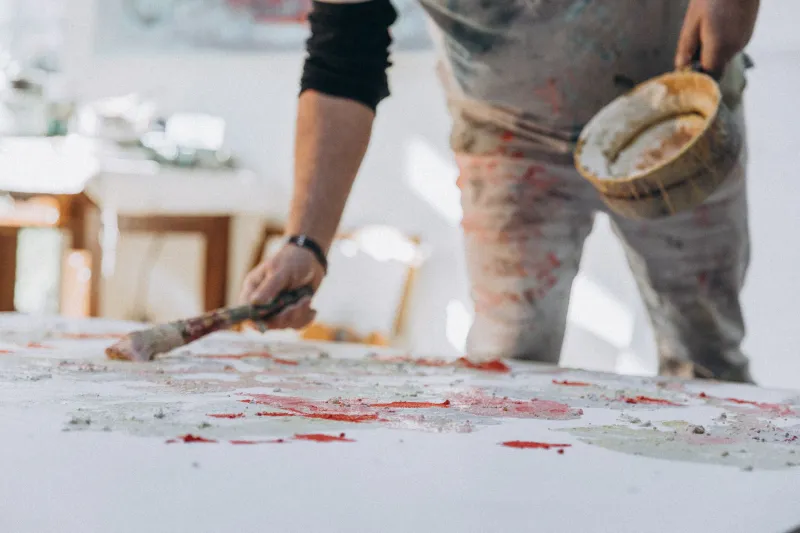
There's probably a medium you've already decided isn't for you.
Maybe it's watercolor — too unpredictable, bleeds everywhere, feels like you're fighting the paper instead of working with it. Maybe it's writing long-form when you're a visual person, or shooting video when you've always worked in stills. Maybe it's the thing your friend keeps telling you to try and you keep nodding along while privately thinking absolutely not.
Here's the uncomfortable thing: that resistance? It's worth paying attention to — not as a reason to stay away, but as a reason to get closer.
The Comfort Zone Is Also a Blind Spot
When you work in your preferred medium, you're drawing on a toolkit you've spent years building. You know the shortcuts. You know how to recover from mistakes. You have a voice that fits the format like a worn-in pair of shoes. That fluency is genuinely valuable — but it also means you stop noticing things.
You don't question why you make certain choices because those choices feel natural. You stop asking whether there's another way. The medium starts making decisions for you.
Working in unfamiliar territory breaks that autopilot. Suddenly you're back to asking basic questions — how does this even work, what am I actually trying to say, why did I make that mark — and those questions are the same ones that push your craft forward, no matter what medium you eventually answer them in.
It's not about becoming a master of something new. It's about what the struggle reveals.
What Limitation Actually Does to Creativity
There's a reason so many artists talk about constraints as catalysts. The poet who writes in strict meter finds things to say that free verse wouldn't have pulled out. The illustrator who's only allowed three colors has to think harder about value, contrast, and composition than someone working with a full palette.
Limitation forces prioritization. And prioritization forces clarity.
When you're working in a medium that doesn't bend to your habits, you can't fall back on technique. You have to rely on intention. You have to know — actually know — what you're trying to communicate, because you don't have the tools to fake it.
That's not punishment. That's one of the more honest conditions you can put yourself in as a creator.
The Resistance Is Data
Pay attention to how you hate the medium. The specifics matter.
If you hate watercolor because it's unpredictable, that might mean you've been over-controlling your work and could benefit from learning to collaborate with chance. If you hate writing because it's slow and you have to sit with your ideas longer than feels comfortable, that slowness might be exactly what your practice needs. If you hate video because you don't want to be on camera, that's worth sitting with too — not necessarily to make yourself do it, but to understand what it's protecting you from.
The aversion is usually pointing at something real. Not always something you need to fix, but always something worth examining.
A Few Real Examples Worth Thinking About
David Bowie famously used cut-up techniques — literally cutting up text and rearranging it randomly — to break out of lyrical patterns he'd gotten too comfortable with. The discomfort of nonsense as a starting point pushed him somewhere his own instincts wouldn't have gone.
Chuck Close, the American painter known for his massive photorealistic portraits, started working on a grid system partly out of necessity — his prosopagnosia made it hard for him to recognize faces. The constraint became the style.
You don't need to be Bowie or Close for the principle to apply. Plenty of illustrators have started writing to understand narrative structure better. Plenty of writers have picked up drawing to stop being precious about their prose. The medium swap isn't the point — what it teaches you to bring back is.
How to Actually Do This Without It Feeling Like Homework
The trick is to go in without expectations of output. You're not trying to produce something good. You're trying to learn something.
Pick the medium you've dismissed and give yourself a small, low-stakes prompt. Not make something impressive in watercolor but spend 20 minutes trying to paint something you can see from where you're sitting. Not write a short story but describe one thing that happened today without using any adjectives.
Keep the bar low enough that failure isn't really failure — it's just information.
And take notes. Not formal notes, just a running mental inventory of what frustrated you, what surprised you, what you kept wanting to do that the medium wouldn't let you. That inventory is the actual product of the exercise.
You Don't Have to Love It
This isn't an argument for abandoning what you do well or forcing yourself into a creative identity that doesn't fit. You don't have to become a watercolorist. You don't have to start a YouTube channel if video genuinely doesn't interest you.
But spending some time in the medium you've written off — even a few hours, even once — has a way of clarifying what you actually value about your own practice. Sometimes you come back to your preferred medium with new questions. Sometimes you come back with new answers. Sometimes you just come back with a deeper appreciation for why you chose what you chose.
Any of those outcomes is worth the discomfort.
The medium you hate might not have anything to teach you about itself. But it almost certainly has something to teach you about you.