When You Messed Up and Made Something Better: The Hidden Power of Creative Accidents
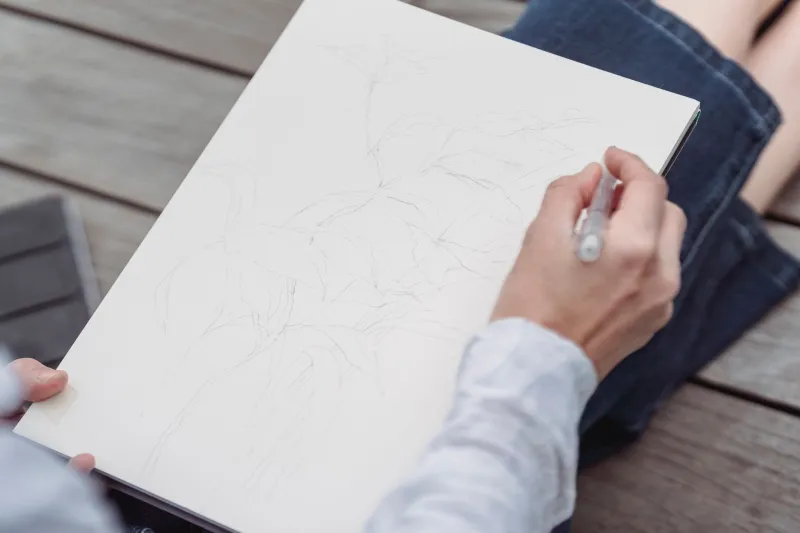
There's a particular kind of panic that hits when something goes sideways in the middle of making something. A smear where there should be a clean line. A chord you didn't mean to play. A sentence that came out completely wrong but somehow refuses to be deleted. Your instinct is to fix it, cover it, start over. But what if that instinct is the thing getting in your way?
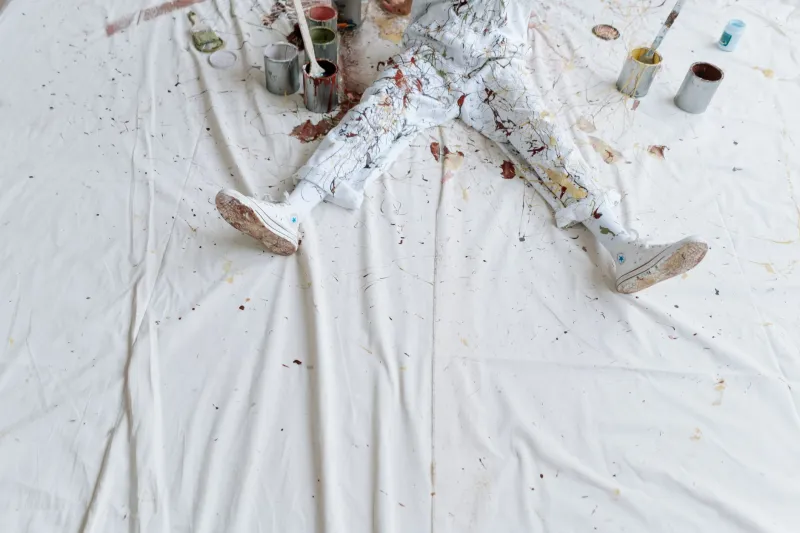
Some of the most recognizable creative work in existence started as a mistake. Jackson Pollock didn't set out to drip paint across a canvas and call it done — he arrived at it through restlessness and accident. Bob Ross built an entire television career on the idea that there are no mistakes, only happy accidents. These aren't just feel-good quotes for coffee mugs. They're pointing at something real about how creative truth actually surfaces.
Control Is a Beautiful Lie
When you sit down to make something — anything — you carry a version of it in your head. A finished shape, a target feeling, a destination. And that mental blueprint is useful. It gets you started. It gives you direction. But it's also, in a very real sense, a fiction. The work you imagine is not the work you'll make. It never is.
The gap between intention and outcome is where most creators live in a low-grade state of frustration. You wanted this, you got that. But here's what rarely gets said out loud: that often has something this never could. Because this was controlled. That was free.
When your hand slips, when the take goes off-script, when the clay collapses in a direction you weren't steering — something in your subconscious is suddenly running the show. And your subconscious has been paying attention to things your conscious mind is too busy planning to notice.
The Mistake That Knew More Than You Did
Think about the last time you made something you didn't plan. Maybe you were sketching loosely and a face appeared that you didn't intend to draw. Maybe you were freestyling a melody and something came out that was more emotionally loaded than anything you'd carefully composed. Maybe you wrote a line of dialogue in a hurry and it was the truest thing in the whole draft.
That's not luck. That's access.
When the pressure of doing it right lifts — even briefly, even by accident — something that's been waiting gets to come through. Your real aesthetic instincts. Your actual emotional state. The specific, weird, particular thing that only you would make. The stuff that makes work feel like it came from a real person and not a template.
Intentional choices are filtered. They pass through your self-editor, your awareness of what looks good, what seems acceptable, what matches the plan. Accidental choices skip all of that. They arrive unscreened. And sometimes what's unscreened is exactly what the work needed.
Why We Rush to Fix It
So if mistakes are so generative, why do we treat them like emergencies?
Partly it's training. Most of us grew up in environments — schools, workshops, critiques — where mistakes meant lost points, lower grades, public correction. The message was consistent: errors are setbacks. You lose ground when you mess up. You need to recover.
But creative work isn't a test. There's no answer key. And yet we carry that old wiring into the studio, into the writing session, into the recording booth. The second something goes wrong, the alarm sounds. Fix it. Undo it. Pretend it didn't happen.
The problem is that impulse doesn't just erase the mistake — it erases the possibility inside the mistake. You hit undo before you even looked at what you had.
Sitting With the Wrong Thing
There's a practice worth building: when something goes wrong, don't touch it immediately. Just look at it. Or listen to it. Or read it back. Give it thirty seconds before you decide it's garbage.
This sounds small, but it's genuinely hard. The discomfort of a mistake is visceral. It feels urgent. But urgency is often just anxiety in a hurry, and anxiety is a terrible creative director.
When you slow down and actually examine the thing that went sideways, you start to notice details. Maybe the color that landed wrong is actually more interesting than the one you planned. Maybe the improvised line has a rhythm your scripted version was missing. Maybe the structural collapse of the piece is pointing you toward a form that fits better than the one you were forcing.
You don't have to love every accident. Most of them really are just mistakes. But some of them are gifts you almost threw away.
The Distinctive Work Lives in the Deviation
Here's something worth sitting with: the work that tends to feel most you is rarely the work that went exactly as planned. The pieces that feel alive, that surprise even you when you revisit them, that other people respond to with something more than polite appreciation — those usually have a little chaos in their DNA.
Because the perfectly executed plan looks like competence. And competence is fine. But it doesn't have a fingerprint. Everybody who learned the same techniques can produce competence. What they can't replicate is your particular accident, your specific deviation, the thing that happened because of the exact combination of your hand and your mood and the weird light in the room that afternoon.
That's the stuff that makes work singular. And it almost never arrives on purpose.
Making Room for Things to Go Wrong
This isn't an argument for being sloppy or abandoning craft. Knowing your tools, understanding structure, building technical skill — all of that still matters. But skill is most powerful when it's loose enough to absorb a surprise instead of fighting it.
Some creators build accident into their process deliberately. They work fast to outrun their own control. They use unfamiliar materials. They set timers that force them to stop before they can over-refine. They save every draft, including the broken ones. They keep a folder of failures they're not ready to evaluate yet.
The point isn't to manufacture chaos. It's to stay open to what shows up uninvited.
Because sometimes the thing you didn't plan is the thing you've been trying to make all along — you just didn't know how to get there on purpose.