The Boring Part Is the Whole Thing: How Unglamorous Routines Actually Keep Creators Working

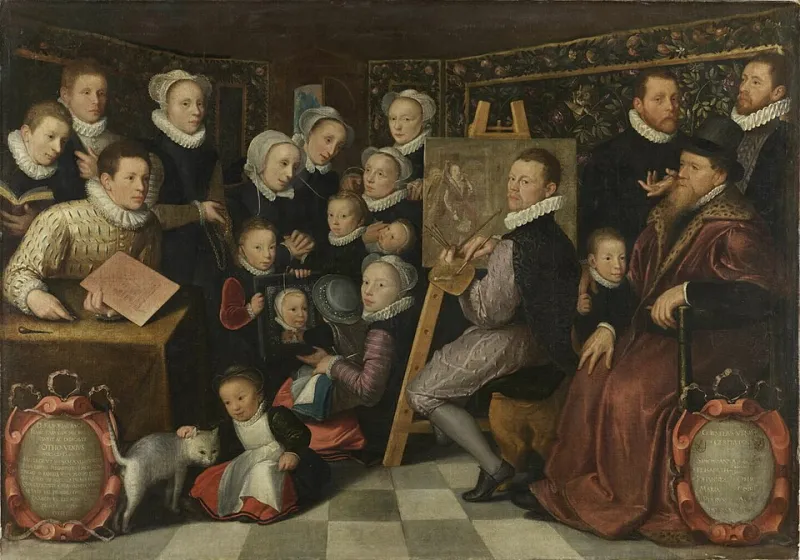
Photo: Snehangshu36, CC BY-SA 4.0, via Wikimedia Commons
The Part Nobody's Documenting
Scroll through any creator's feed and you'll see the peaks: the finished piece, the opening night, the big project reveal. What you won't see is the Tuesday afternoon when they sat down, answered four emails, reorganized their supplies, did a few warmup sketches that went nowhere, and then actually started the thing.
That Tuesday afternoon is most of a creative life. It's also the part that determines whether the peaks happen at all.
There's a cultural fixation on inspiration—on the idea that good work comes from some elevated state of feeling, some convergence of mood and moment. And sure, those moments exist. But they show up for people who have a practice in place. The inspiration finds them at the desk, not the other way around.
The infrastructure of creative work—the scheduling, the maintenance, the administrative tedium, the setup rituals—is where consistency actually lives. And it's almost never talked about honestly.
The Studio as a Habit, Not a Mood
One of the most common things that separates people who make work regularly from people who want to is this: the working ones have stopped waiting to feel like it.
This doesn't mean they're making great work every day. It means they show up anyway. They have a time, a place, and a set of small actions that signal to their brain that this is what's happening now.
For some people, that's as simple as making coffee and sitting at the same chair every morning before the rest of the house wakes up. For others, it's a specific playlist, or a ten-minute warmup exercise, or the act of physically cleaning the workspace before starting. The content of the ritual matters less than the consistency of it.
What these routines do, neurologically, is reduce the decision-making overhead. When you have to decide every single day whether to make work—and when, and for how long, and what to work on—you burn through mental energy before you've made anything. The boring routines eliminate a lot of those decisions. You just do the thing you always do, and then you start.
The Maintenance Nobody Talks About
Here's a partial list of things that happen regularly in a working creative practice that almost never make it into the conversation about creative practice:
Organizing files. Backing up files. Backing up the backup. Cleaning brushes properly, not just rinsing them. Restocking supplies before you run out. Responding to the email you've been avoiding. Updating your portfolio. Invoicing. Following up on invoices. Fixing the lighting in your workspace because it's been bothering you for three weeks and you keep working around it instead of just fixing it.
None of this is glamorous. None of it is the work. But when any of it falls apart, the work suffers. You spend twenty minutes looking for a file that should have been labeled better. You can't start a new painting because the brushes are a mess and you have to deal with that first. The administrative pile gets big enough that it becomes its own form of anxiety, which leaks into everything else.
The maintenance isn't separate from the practice. It's what keeps the practice functional.
Scheduling Like You Mean It
One of the most unglamorous things a working creator does is treat their creative time like an actual appointment—not a suggestion, not a "when I get to it," but a blocked chunk of time that doesn't move for non-emergencies.
This feels obvious when you say it out loud. It also feels mildly embarrassing to admit how many people don't do it. The creative time stays soft and flexible while everything else in the calendar stays firm. Meetings are real. Dentist appointments are real. The hour you set aside to write or paint or record somehow isn't quite as real, and it's the first thing to go when the week gets complicated.
The shift that happens when you start treating your creative time as non-negotiable is almost immediate. Not because you suddenly have more inspiration, but because you've stopped giving yourself the option of skipping it. You show up. Sometimes it's bad. Sometimes it's fine. Occasionally it's genuinely good. But it happens, which is the whole point.
A lot of creators find that the specific time of day matters more than they expected. Not because there's a universally correct answer—some people work better late, some people can only access their best thinking in the morning—but because your body and brain do have patterns, and working with them instead of against them reduces the friction significantly.
The Warmup Is Not Optional
Athletes warm up. Musicians run scales. Actors do vocal exercises. Somehow, visual artists and writers often skip straight to the main event and then feel frustrated when the first hour is slow and stiff.
The warmup is not a waste of time. It's not the preliminary to the real work. It is part of the real work, in the same way that stretching is part of a run.
For some people, this looks like sketching loosely without any intention of keeping what they make. For writers, it might be journaling, or writing a scene they know won't be in the final draft, or just typing stream-of-consciousness for fifteen minutes to get the voice moving. The specific form doesn't matter much. The function is to lower the stakes enough that the brain stops clenching and starts moving.
Building a warmup into the routine also creates a natural on-ramp for days when motivation is low. You don't have to feel like making work. You just have to feel like doing the warmup. And once you're in motion, the rest tends to follow.
What Boring Actually Means
There's a reason the unglamorous stuff gets skipped in most creative content: it doesn't make for compelling posts. A photo of a clean workspace and a cleared inbox doesn't perform as well as a finished piece or a process video. The infrastructure is invisible by design.
But here's what's actually true: the creators whose work you admire most are almost certainly doing a lot of boring things to make that work possible. They're managing their time carefully. They're maintaining their tools. They're doing the administrative work that keeps the whole operation from collapsing. They're showing up on the days when nothing is flowing and making mediocre things until something better comes through.
The boring part isn't a necessary evil. It's the foundation. The interesting work sits on top of it, and without it, the interesting work doesn't happen consistently enough to matter.
If your creative practice feels unstable—if you're making things in bursts and then going dark for months—it's worth asking what infrastructure is missing. Not what inspiration you're waiting for. What schedule isn't in place. What maintenance keeps getting skipped. What routine hasn't been built yet.
The answer is probably less exciting than you'd like. That's kind of the whole point.