The Gift of the Half-Built Thing: What Abandoned Projects Actually Teach You

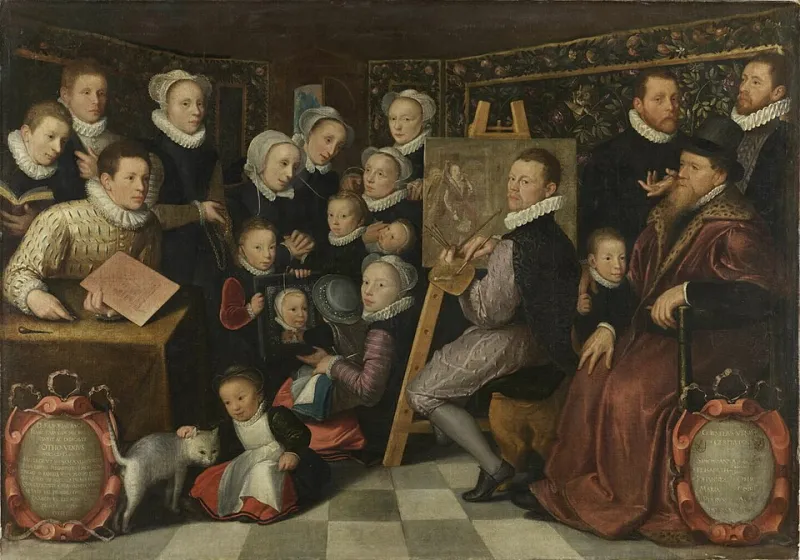
Photo: Arts Practicum, CC BY-SA 2.0, via Wikimedia Commons
Somewhere on your hard drive — or in a sketchbook shoved under your bed, or in a folder you've renamed three times trying to forget it exists — there's a project you didn't finish. Maybe it's a novel that stalled out around chapter four. Maybe it's a painting you gessoed over in a moment of frustration. Maybe it's a short film you shot half of before the whole thing just... stopped feeling right.
We don't talk about those enough.
The creative conversation in the US tends to worship completion. Finish what you start. Ship it. Put it out into the world. And look, there's real value in that push — perfectionism kills more good work than abandonment ever will. But somewhere along the way, we started treating unfinished work like a character flaw instead of what it often actually is: a data point. A signal. A strange, quiet kind of gift.
The Myth of the Wasted Effort
Here's the thing about an abandoned project — nothing you put into it disappears. The hours you spent sketching out characters, building a color palette, or recording scratch tracks don't vanish when you close the file. They settle into you. They become part of how you think about the next thing.
Franz Kafka never finished The Castle or The Trial. He actually asked his friend Max Brod to burn them. Brod didn't, obviously, and now those fragments are considered some of the most important literary works of the twentieth century. But even setting aside the question of their literary value — what did the writing of them do for Kafka's practice? What did working through those labyrinthine narratives teach him about interiority, about bureaucracy, about the way dread accumulates? The unfinished state wasn't a failure. It was the form those ideas needed to take.
You're probably not Kafka. Neither am I. But the principle holds at every scale.
What Stopping Actually Tells You
When a project falls apart, most creators do one of two things: they blame themselves ("I'm lazy, I have no follow-through") or they blame the work ("It was a bad idea anyway"). Both responses are understandable. Neither one is particularly useful.
The more interesting question is: where did it fall apart?
Did you lose energy right after the initial excitement wore off? That's worth knowing. A lot of creators are high on concept and low on process — the idea of the thing is more compelling than the actual making of it. That's not a moral failure. It's just information about how your creative engine runs, and it might mean you need to build in different kinds of momentum for mid-project slumps.
Did it collapse when you showed it to someone? Or when you imagined showing it to someone? That's a different signal — one that might point toward fear of judgment rather than a problem with the work itself.
Did it stop when the project got hard in a specific way — technically, emotionally, structurally? That's probably where your next growth edge lives.
Abandoned projects are basically diagnostic tools. They show you exactly where your practice gets thin.
The Artists Who Left Things on the Floor
Leonardo da Vinci left a staggering number of works unfinished. The Adoration of the Magi, Saint Jerome in the Wilderness, dozens of others. Art historians have spent centuries debating why. But what's striking, looking at his notebooks, is how much the incomplete work fed the complete work. The abandoned studies, the half-resolved compositions — they were part of an ongoing conversation with himself about what he was trying to understand.
More recently, think about how many musicians release albums with tracks that feel like sketches — interludes, fragments, things that trail off. Artists like Kendrick Lamar or Bon Iver have made entire aesthetic statements out of incompleteness, out of the feeling of something still becoming. That's not an accident. It's a sophisticated understanding that the unresolved has its own kind of power.
You don't have to publish your unfinished work to learn from it. But you do have to be willing to sit with it honestly instead of just burying it.
Giving Yourself Permission to Walk Away
There's a difference between quitting and releasing. Quitting usually comes with shame attached — a story you tell yourself about what the abandonment means about you. Releasing is something else. It's acknowledging that this particular project has given you what it has to give, and that forcing it to completion would actually be less honest than letting it rest.
Some projects are meant to be finished. Some are meant to teach you something and then step aside. The tricky part is figuring out which is which, and that's genuinely hard — especially when you're in the middle of it and can't see clearly.
One thing that helps: give yourself a specific window. Come back to the abandoned thing in three months, or six. Look at it with fresh eyes and ask honestly — does this still have somewhere to go, or did it already do its job? Sometimes you'll find it has more life than you thought. Sometimes you'll confirm that it's done. Either answer is useful.
The Graveyard Is Also a Garden
Every creator's archive of unfinished work is, in a weird way, one of their most valuable assets. It's a record of where their curiosity has taken them, what problems they've wrestled with, what aesthetic territory they've moved through. The half-built things aren't evidence of failure. They're evidence of a practice that's actually alive — one that's willing to start things, take risks, and change direction when something isn't working.
The most important thing you can do with your abandoned projects isn't to finish them out of guilt. It's to actually look at them. Really look. Ask what they were trying to be, where they ran out of road, and what that tells you about where you're headed next.
The unfinished masterpiece isn't a tragedy. Sometimes it's exactly what it needed to be.